

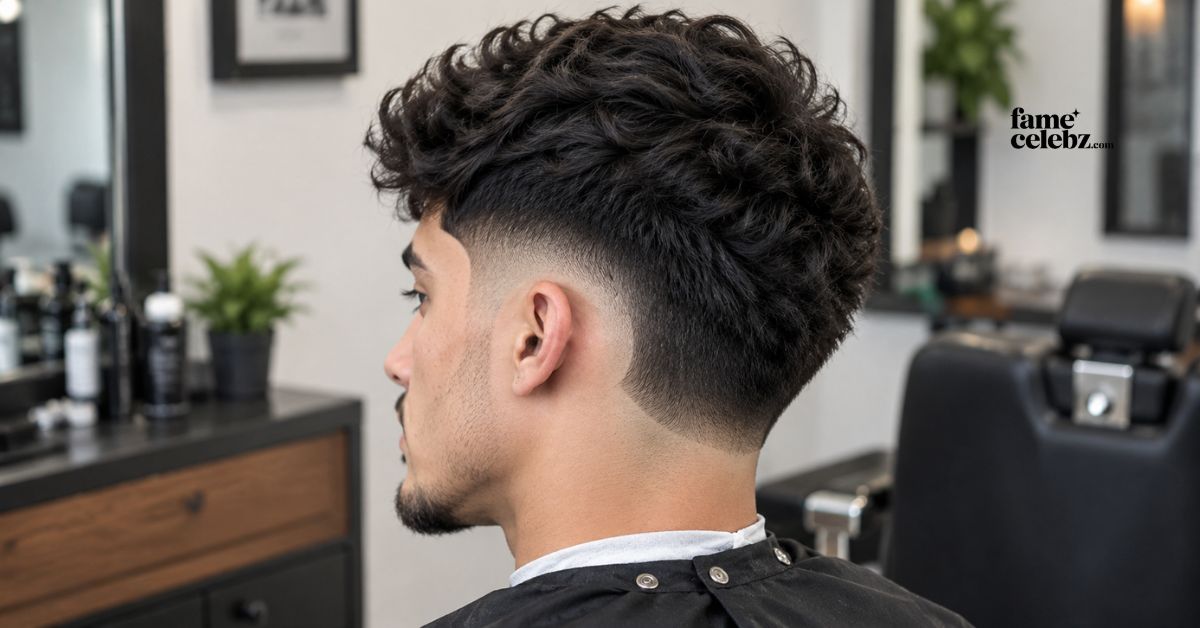
The Taper Low Burst Fade is a stylish haircut that combines the clean, gradual look of a taper with the curved shape of a burst fade around the ears. It creates a neat appearance while keeping the sides and back defined without taking too much length away. This versatile style works well with curly, wavy, straight, and textured hair, making it a popular choice for different face shapes and personal styles.
In this complete guide, we’ll explore the best Taper Low Burst Fade styles, barber tips, maintenance advice, and ways to customize the cut. Whether you want a subtle everyday look or a sharper modern hairstyle, understanding the fade placement, taper length, and top styling can help you choose a version that suits your hair type and preferences.
You can also read; 1499+ New Instagram Bio For Boys | Cool, Attitude & Stylish 2026
What a Taper Low Burst Fade Is
A taper low burst fade combines a gradual taper with a low burst fade around the ears. The hair gets shorter as it moves toward the sideburns and neckline, while the burst section creates a curved fade that follows the shape of the ear. The result is clean and modern without removing too much hair from the sides.
This haircut gives you plenty of flexibility on top. You can wear it with curls, waves, textured hair, a fringe, a quiff, or a simple natural finish. Because the fade is kept relatively low, it can also look more subtle than higher fade styles.
Taper vs Low Fade vs Burst Fade
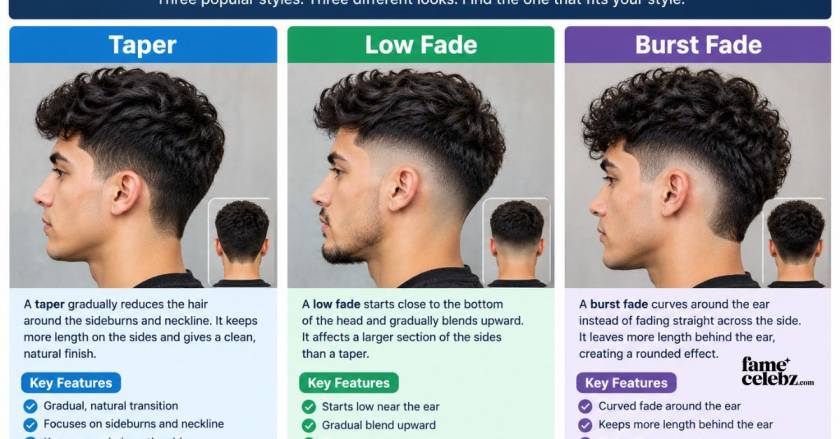
Taper
A taper gradually reduces the hair around specific areas, usually the sideburns and neckline. The transition is soft and natural rather than extending high up the sides of the head. A taper is a good choice when you want a clean haircut while keeping plenty of hair on the sides.
Low Fade
A low fade starts close to the bottom of the head and gradually blends upward. Compared with a traditional taper, it usually affects a larger section of the sides. The result is a noticeable but relatively conservative fade that works with many hairstyles.
Burst Fade
A burst fade is designed to curve around the ear instead of creating an even fade across the entire side. The hair behind the ear can remain longer, creating a distinctive rounded effect. When combined with a low taper, the style can look both sharp and understated.
Who a Taper Low Burst Fade Suits
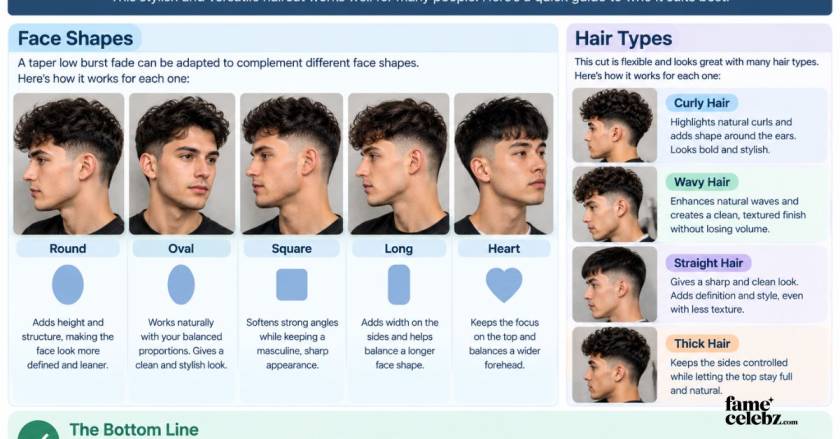
Face Shapes
A taper low burst fade can work with many face shapes because the amount of length left on top can be adjusted. For rounder faces, some extra height or texture on top can create a more elongated appearance. Longer or angular face shapes can often work well with a flatter or more controlled top.
The key is not simply choosing the haircut but adjusting the fade height, top length, and overall shape to complement your features.
Hair Types
This haircut works particularly well with curly and wavy hair because the burst shape naturally highlights texture around the ears and back. Straight and thick hair can also be styled with texture, volume, or a messy finish.
For very fine hair, a barber may use a softer transition rather than an extremely high-contrast fade. Your natural hair density should be considered when deciding how short the fade should go.
Best Styles to Ask For
There are several ways to customize a taper low burst fade. A curly taper low burst fade keeps natural curls on top while cleaning up the area around the ears. A textured crop with a low burst fade gives a shorter, contemporary appearance, while a longer textured top offers more styling flexibility.
You can also combine the haircut with a fringe, messy top, side part, quiff, or natural waves. If you have thick or curly hair, ask your barber to preserve enough length and texture on top so the haircut does not lose its character.
How to Ask Your Barber for It
The easiest way to get the desired result is to clearly describe where you want the fade and how much length you want to keep. Tell your barber that you want a low burst fade around the ears with a gradual taper at the sideburns and neckline.
Also explain whether you want the sides very short or slightly fuller. If you’re unsure about clipper lengths, showing a reference photo is usually more useful than trying to describe every detail with numbers.
A Script That Works
You can say:
“I want a low burst fade around the ears, blended into a taper at the sideburns and neckline. Keep the sides fairly low and leave enough length on top for texture and styling.”
If you want a softer appearance, add that you prefer a subtle, natural transition rather than a very high-contrast fade.
What to Show
Bring one or two clear photos showing the haircut from the front, side, and back when possible. A side view is especially useful because it lets your barber see exactly how far the burst fade should curve around the ear.
Avoid relying on a single front-facing photo. Two people can have similar-looking hairstyles from the front but require different fade placement because of differences in hair density, head shape, and ear position.
Keeping a Taper Low Burst Fade Sharp
Fresh fades gradually lose their definition as the hair grows. Regular maintenance keeps the curved area around the ear and the neckline looking clean.
Your styling routine also matters. Use a small amount of suitable styling product rather than applying too much. For curly or wavy hair, products designed to define natural texture can help maintain the shape without making the hair look heavy.
Touch-Up Timeline
Most people can expect the haircut to look noticeably less sharp after two to three weeks, although growth speed varies. If you like a very fresh fade, you may prefer more frequent touch-ups.
For a more relaxed appearance, you can wait longer and simply clean up the neckline and sideburns between full appointments.
Neckline and Sideburn Cleanup
The neckline and sideburns are among the first areas to lose their clean appearance. Light cleanup can help maintain the haircut, but avoid repeatedly cutting too high into the taper.
If you’re doing any maintenance at home, use a careful approach. Taking off too much hair can change the shape of the original fade and make the next barber visit more difficult.
Mistakes That Ruin the Cut
One common mistake is asking for a burst fade without explaining how low or high you want it. Another is removing too much length from the sides when the goal is a subtle taper.
Poor blending can also make the haircut look uneven. Over-cleaning the neckline or sideburns can change the intended shape, while using too much styling product can hide the natural texture that makes the haircut attractive.
Styling It at Home
Start with clean, slightly damp hair and apply a small amount of styling product appropriate for your hair type. Use your fingers or a comb to create the desired shape, then allow the hair to dry naturally or use a blow dryer if you need additional volume.
For curls and waves, avoid excessive brushing after the hair has dried because it can create frizz. Straight or textured hair can be shaped with a matte paste or lightweight styling cream for a natural finish.
Taper Low Burst Fade vs Blowout Taper
A taper low burst fade places more emphasis on the curved fade around the ear while keeping the overall sides relatively controlled. A blowout taper generally focuses more on creating volume and outward movement, particularly around the sides and back.
The two styles can look similar from certain angles, but their shapes are different. If you want a defined curved area around the ear, the burst fade is the more important part to communicate to your barber. If you prefer fuller sides with a lifted, blown-out appearance, a blowout taper may be closer to what you want.
Is It Okay for School, Work, or Formal Settings?
A taper low burst fade can be adapted for many environments. Keeping the fade low, the transition smooth, and the top neatly styled can create a relatively conservative version suitable for school or many workplaces.
For formal settings, a clean neckline, tidy sideburns, and controlled styling can make the haircut look polished. If your school or workplace has specific grooming rules, check those requirements before choosing a more pronounced burst fade.
FAQs
What is a taper low burst fade?
It combines a gradual taper with a curved burst fade around the ears for a clean, modern look.
Is a taper low burst fade good for curly hair?
Yes. The style works especially well with curls because the burst fade highlights the natural texture.
How often should I get a touch-up?
A touch-up every 2–3 weeks can help keep the fade and neckline looking sharp.
What should I tell my barber?
Ask for a low burst fade around the ears with a gradual taper on the sideburns and neckline.
Can I wear this haircut to work?
Yes. A subtle, low version with neat styling can work well in many professional settings.
Final Thoughts
The taper low burst fade is a versatile haircut that balances a clean taper with the distinctive curve of a burst fade around the ears. It can be customized for different face shapes, hair types, and personal styles while keeping the overall look modern and manageable.
For the best results, communicate clearly with your barber and bring a reference photo showing the fade from different angles. Regular touch-ups, simple styling, and proper neckline maintenance will help keep the haircut sharp and polished.

Jorge is a passionate celebrity writer and pop culture enthusiast behind FameCelebz.com. He specializes in delivering engaging, up-to-date content about celebrities, entertainment news, trending personalities, and lifestyle insights. With a keen eye for detail and a love for storytelling, Jorge brings readers closer to the world of fame in a simple, informative, and entertaining way.
He believes in creating content that is both accurate and enjoyable, making celebrity updates easy for everyone to understand and follow.